 Skip to content
Commercial Truck Education
Commercial Truck DOT Inspection Preparation Guide
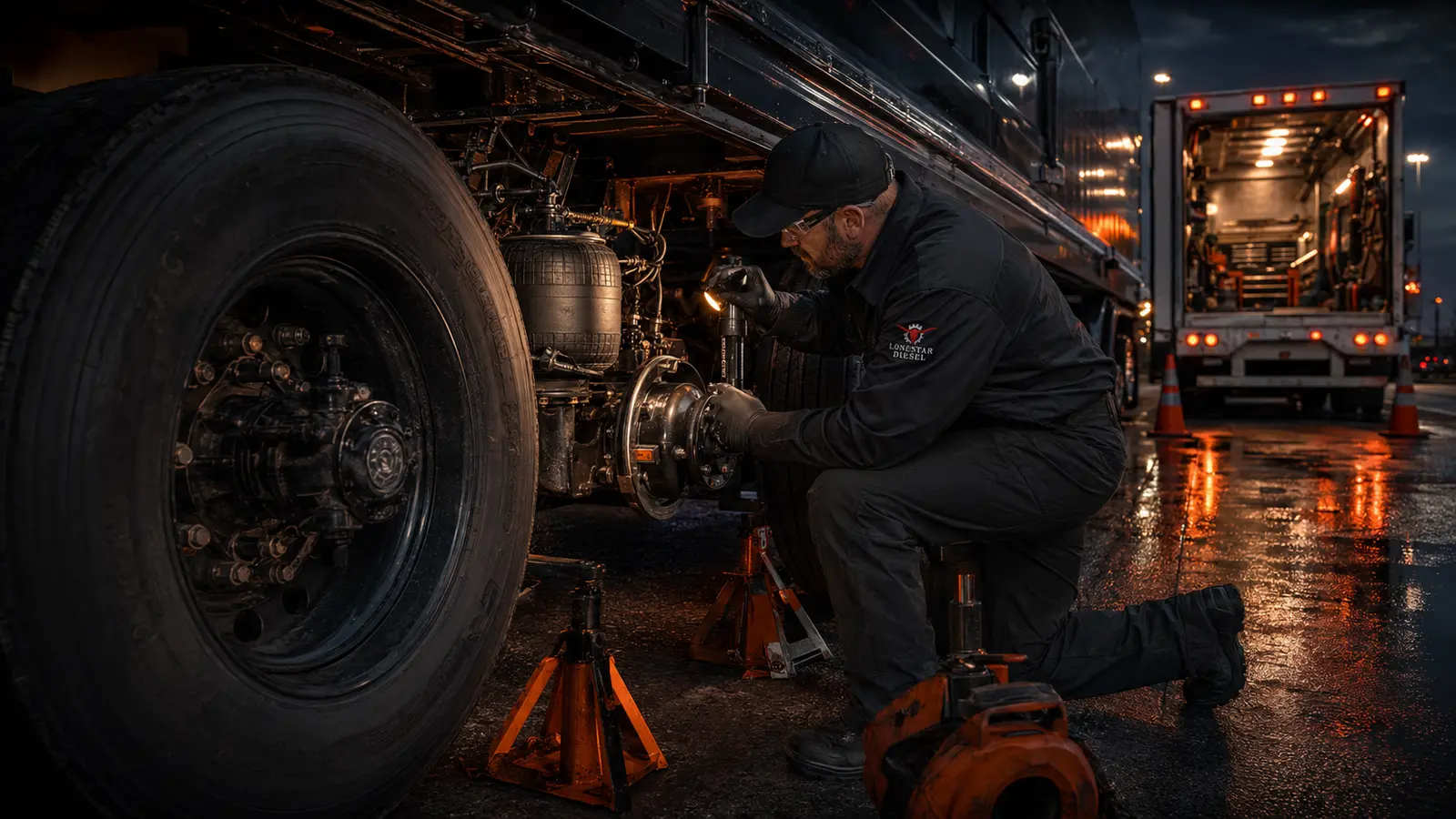
Inspection preparation should be part of normal fleet maintenance rather than a last-minute repair event. Drivers and maintenance teams can reduce avoidable findings by using consistent pre-trip reporting, preventive inspections, documented repairs, and prompt follow-up on safety-related defects.
Published and reviewed by Lonestar Diesel · July 14, 2026 · Commercial educational content
Commercial Context & Safety Note
This guidance is written for semi trucks, tractor-trailers, box trucks, straight trucks, and commercial fleets. It does not replace a physical inspection, manufacturer instructions, fleet policy, emergency authority direction, or applicable law.
Begin With Driver Inspection Reports
Review unresolved defects, recurring complaints, warning lights, air loss, brake behavior, tire condition, lighting, coupling equipment, leaks, and visible damage. Confirm that completed repairs are documented and that the driver understands any remaining watch items.
Inspect Brakes, Air Systems, and Tires
Commercial brake and tire conditions require trained evaluation. Look for visible damage, air leaks, abnormal pressure behavior, worn or contaminated components, damaged hoses, wheel concerns, and conditions that could affect safe operation.
Verify Lighting and Electrical Operation
Check required truck and trailer lamps, markers, reflectors, connectors, wiring, battery connections, and warning indicators. Intermittent lighting faults should be diagnosed rather than temporarily moved or taped into position.
Confirm the Scope of Professional Support
Inspection preparation and repair support are not automatically the same as an official inspection. Confirm credentials, documentation, and the exact service being requested before relying on any provider for a required inspection.
Frequently Asked Questions
Is DOT inspection preparation the same as an official inspection?
No. Preparation, maintenance inspection, repair support, and official inspections may have different requirements. Confirm credentials, documentation, and the exact service requested.
What systems should be reviewed before an inspection?
Common areas include driver-reported defects, brakes, air systems, tires, wheels, steering, suspension, lighting, electrical connections, emergency equipment, coupling, trailer condition, leaks, and records.
Can mobile service help with inspection-related repairs?
Selected diagnostics and repairs may be suitable when the location, access, equipment, parts, safety, and verification requirements allow field work.
Where can fleets check current federal maintenance requirements?
The Electronic Code of Federal Regulations provides current federal text, including 49 CFR Part 396. Fleets should also review applicable state requirements.
Related Service, Resource & Market Coverage
Continue Reading
Official Reference Links
Need Commercial Diesel Service?
Call with the exact location, vehicle type, symptoms, warning information, and urgency.
Commercial Service Area Map
Lonestar Diesel location: 104 Indian Dr, Balch Springs, TX 75181. This is the business location; mobile service coverage extends across DFW and North Texas. Call ahead to confirm current in-shop availability.
Commercial Service Visual Guide


