 Skip to content
Commercial Truck Education
Semi Truck Overheating in DFW: Warning Signs and Safe Next Steps
A rising temperature warning in DFW heat can quickly become a disabled truck or major engine repair. This guide explains the information drivers and fleet teams should capture, the cooling-system conditions a technician may evaluate, and when continued operation or roadside work is unsafe.
Published and reviewed by Lonestar Diesel · July 14, 2026 · Commercial educational content
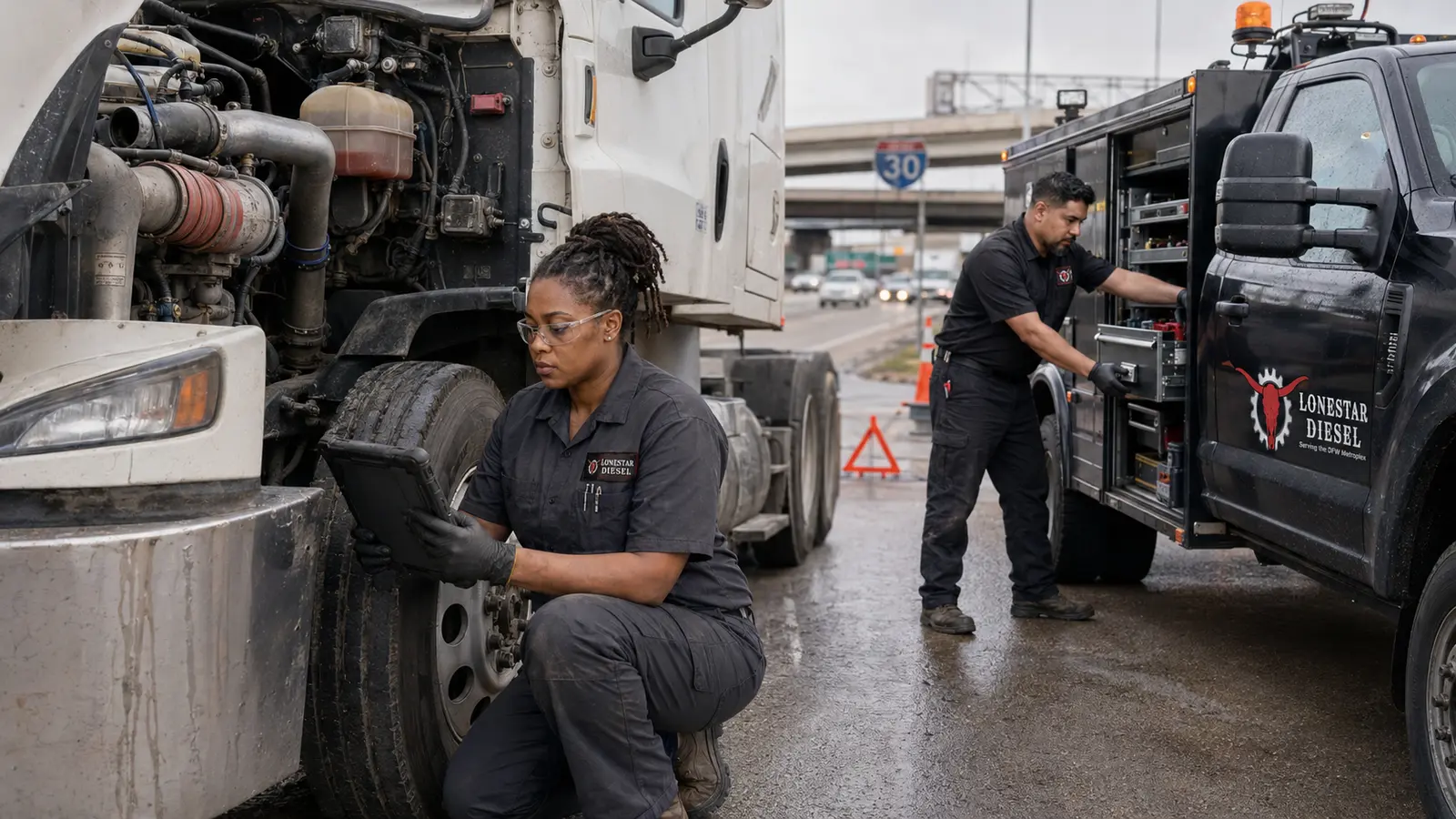
Commercial Context & Safety Note
This guidance is written for semi trucks, tractor-trailers, box trucks, straight trucks, and commercial fleets. It does not replace a physical inspection, manufacturer instructions, fleet policy, emergency authority direction, or applicable law.
Respond to the Temperature Warning Safely
Follow manufacturer and fleet procedures, reduce risk, and move to a safe legal location when possible. Continuing to drive an overheating commercial truck can expand damage and create a roadside emergency. Never remove a pressurized cooling-system cap from a hot engine.
Record the Pattern Before It Disappears
Note the temperature reading, warning message, load, grade, traffic, ambient heat, fan behavior, heater output, recent coolant service, visible leaks, steam, odor, and whether temperature falls at idle or road speed. The pattern helps separate overlapping causes.
Coolant, Hose, Radiator, and Pressure Concerns
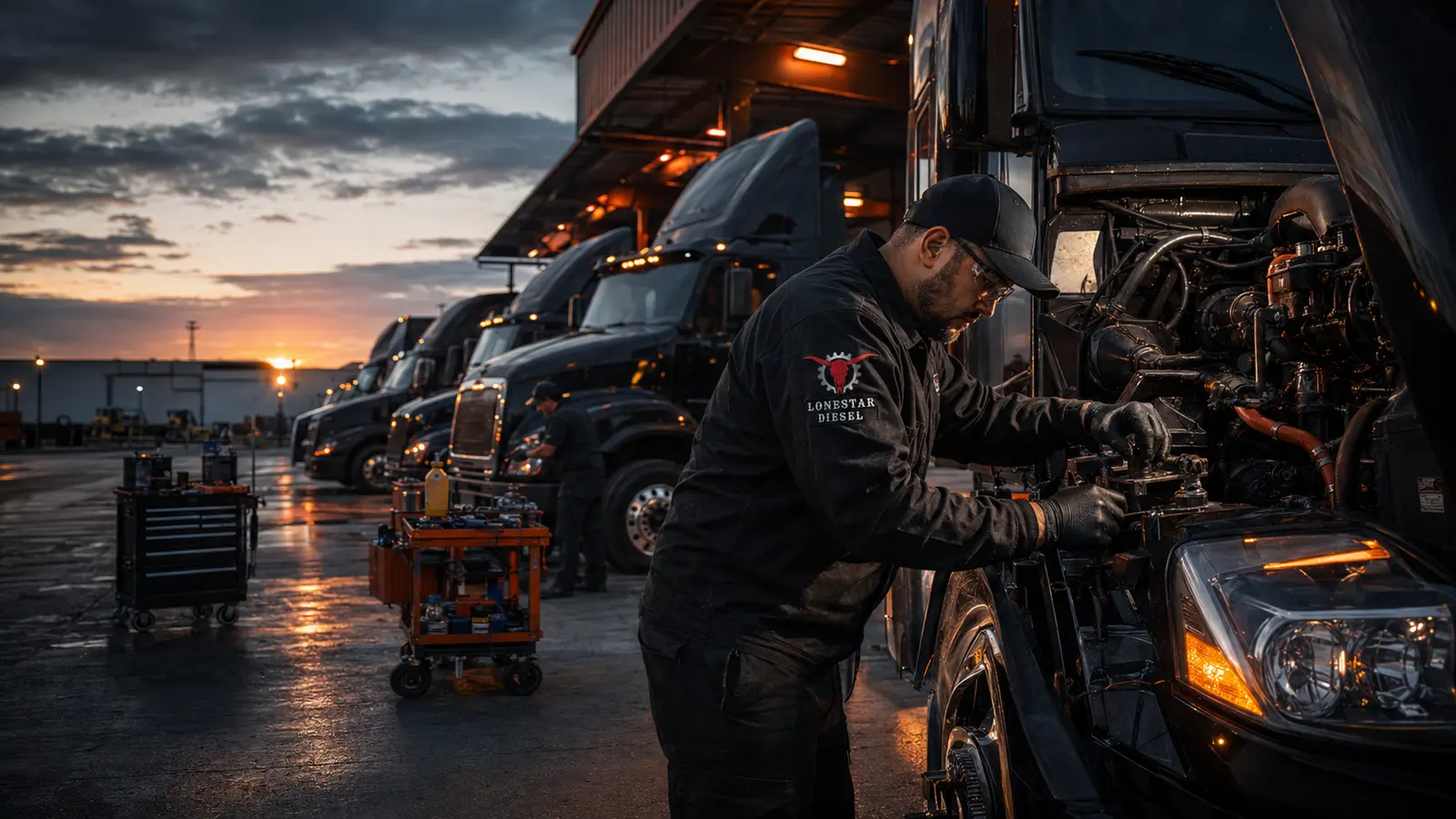
Low coolant, external leaks, damaged hoses, loose connections, radiator restriction, cap or pressure-control issues, and contamination can reduce cooling capacity. A top-off does not identify why coolant was lost and should not replace leak and pressure diagnosis.
Fan, Belt, Thermostat, and Water-Pump Clues
Fan-control problems, belt drive concerns, thermostats, water pumps, pulleys, sensors, wiring, and control inputs can all affect temperature. Correct testing considers the entire system and the condition that produced the warning.
DFW Heat, Idle Time, and Duty Cycle
High ambient heat, stop-and-go traffic, long idle periods, heavy loads, construction dust, and repeated low-speed operation can expose marginal cooling capacity. Preventive inspection should reflect the truck’s actual North Texas duty cycle rather than mileage alone.
What To Tell a Mobile Diesel Provider
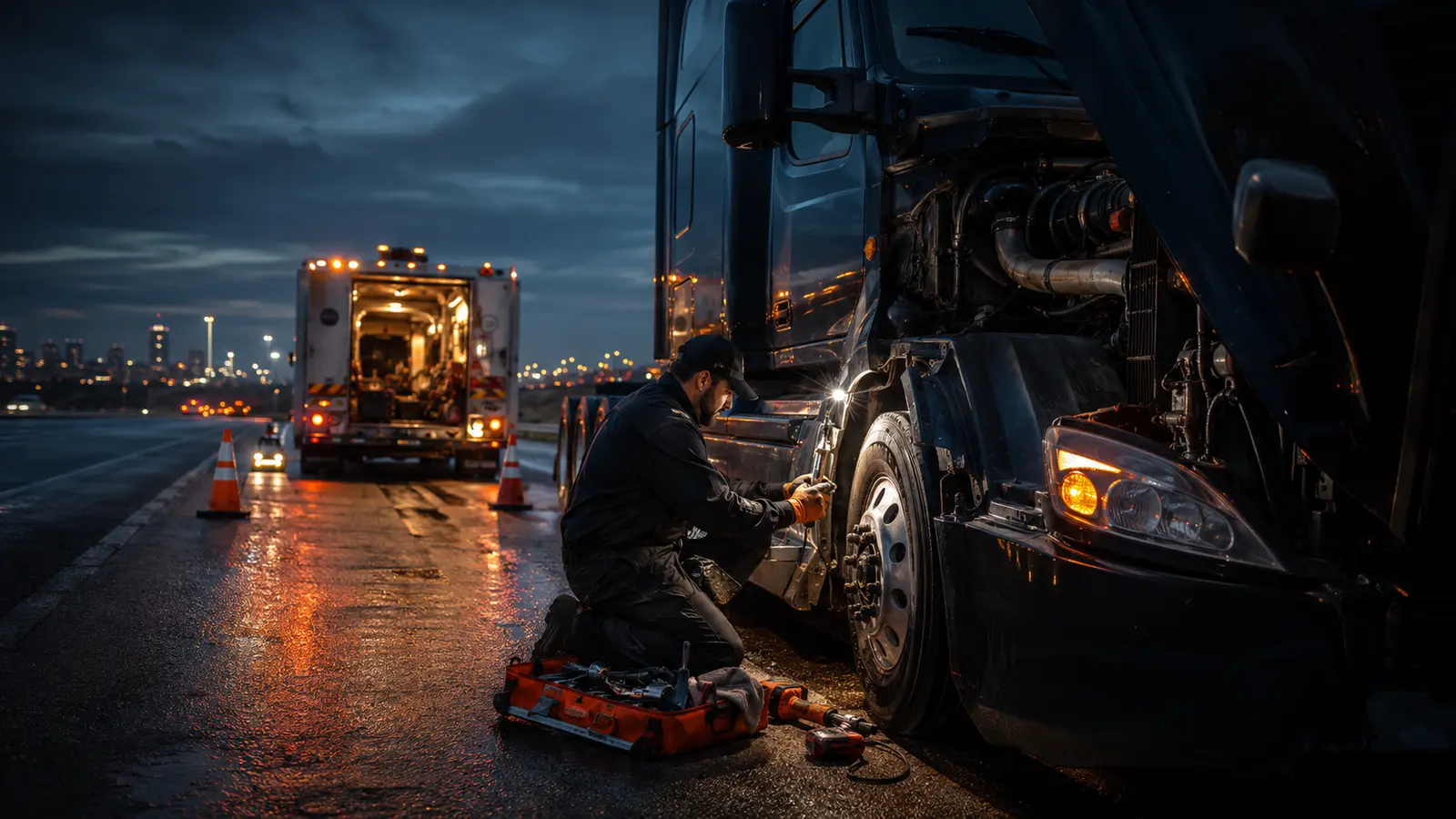
Provide the exact location, truck and engine information, temperature pattern, warning messages, coolant-loss history, recent repairs, photographs, load and route conditions, and whether the truck is positioned in a safe work area.
Roadside Repair Versus Tow or Shop Service
Selected hoses, connections, diagnostics, and cooling-system repairs may be field-suitable. Unsafe access, severe coolant loss, internal-engine concerns, heavy disassembly, unavailable parts, or an inability to verify temperature control may require towing or shop service.
Frequently Asked Questions
Can I drive a semi truck that is overheating?
Continued operation can increase damage and risk. Follow manufacturer and fleet procedures, move to a safe location when possible, and obtain qualified guidance.
Why does a semi truck overheat only in traffic or at idle?
Possible factors include airflow, fan operation, cooling-system capacity, belt drive, restriction, coolant condition, sensors, or control issues. Testing is required to identify the cause.
Can mobile diesel repair fix an overheating truck?
Some diagnostics and repairs may be suitable roadside when the location, access, tooling, parts, safety, and verification requirements allow it.
What should fleets inspect before DFW summer heat?
Review coolant condition and level, leaks, hoses, belts, radiator and charge-air-cooler cleanliness, fan operation, caps, fault history, temperature trends, and manufacturer service requirements.
Related Service, Resource & Market Coverage
Continue Reading
Official Reference Links
Need Commercial Diesel Service?
Call with the exact location, vehicle type, symptoms, warning information, and urgency.
Commercial Service Area Map
Lonestar Diesel location: 104 Indian Dr, Balch Springs, TX 75181. This is the business location; mobile service coverage extends across DFW and North Texas. Call ahead to confirm current in-shop availability.


