...
CALL FOR ROADSIDE SERVICE
Skip to checklistCall (469) 781-2069

Commercial Truck Resource

Commercial Truck No-Start Information Checklist

Use this DFW commercial truck no-start checklist to preserve diagnostic evidence and give dispatch or a mobile diesel technician the information needed for a safer, better-prepared response.

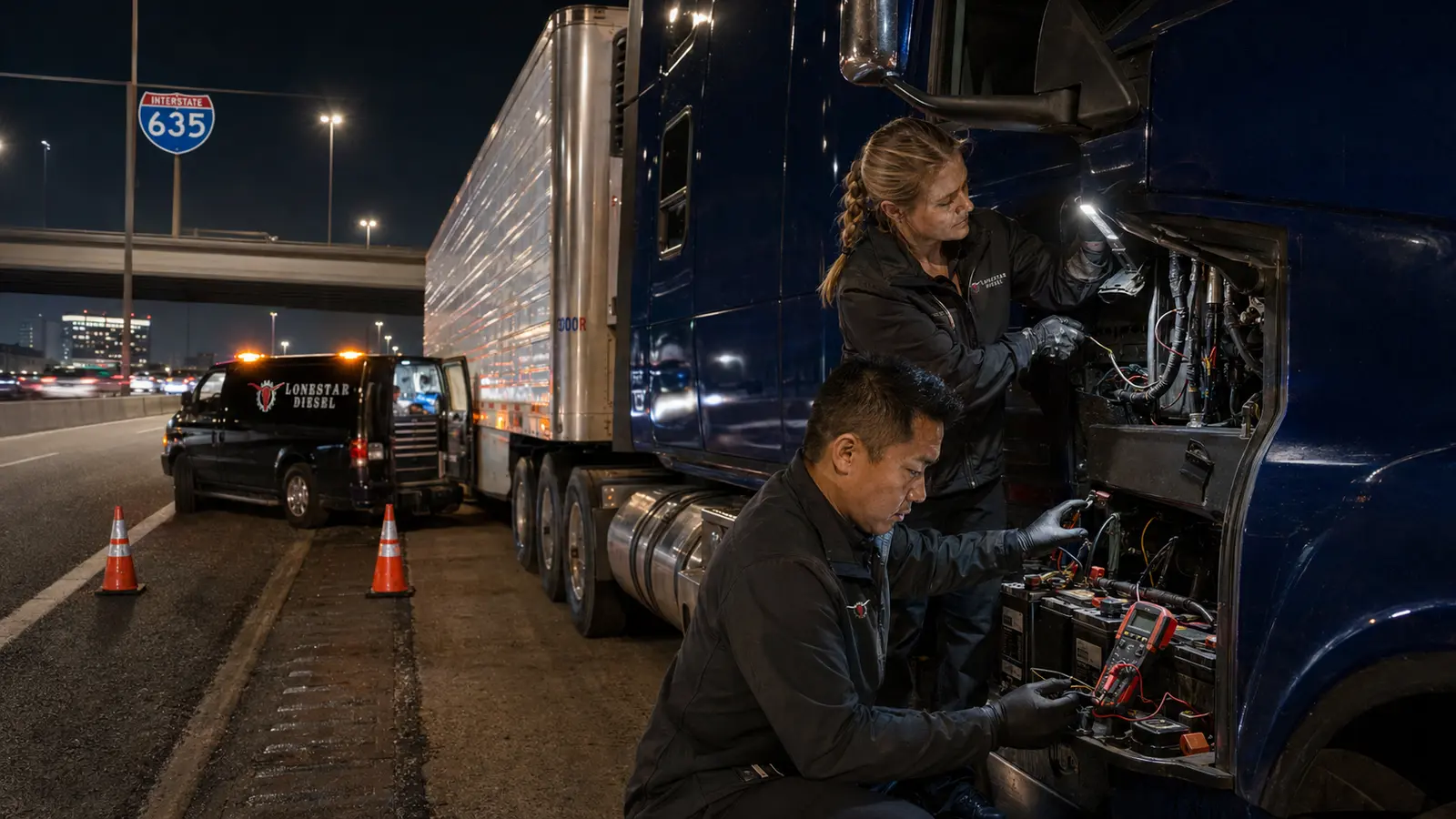
Lonestar Diesel technicians testing the electrical system on a blue tractor-trailer beside Interstate 635 in Dallas at night.

How To Use This Commercial Checklist

Use this guide to improve communication and recordkeeping around a commercial vehicle service need. Adapt it to the truck, trailer, fleet policy, manufacturer recommendations, duty cycle, and applicable requirements.

This resource is educational. It is not an official regulatory form, a complete inspection, legal advice, or authorization to operate unsafe equipment.

Commercial Checklist

1. Confirm the truck is legally and safely positioned before any inspection.

Record completion, observations, follow-up responsibility, and the date when this item is used in a fleet workflow.

2. Record the exact map pin, direction, facility or exit, and access instructions.

Record completion, observations, follow-up responsibility, and the date when this item is used in a fleet workflow.

3. Identify the unit, year, make, model, engine, trailer, and fleet contact.

Record completion, observations, follow-up responsibility, and the date when this item is used in a fleet workflow.

4. Describe whether the engine cranks normally, slowly, clicks, loses power, starts and stalls, or does nothing.

Record completion, observations, follow-up responsibility, and the date when this item is used in a fleet workflow.

5. Photograph dashboard warnings and record messages before cycling power or clearing faults.

Record completion, observations, follow-up responsibility, and the date when this item is used in a fleet workflow.

6. Note recent jump starts, battery replacement, electrical work, fueling, repairs, and weather.

Record completion, observations, follow-up responsibility, and the date when this item is used in a fleet workflow.

7. Record reliable voltage or fault information already available without guessing.

Record completion, observations, follow-up responsibility, and the date when this item is used in a fleet workflow.

8. Check only safe visible conditions such as loose or damaged connections, leaks, odor, smoke, or heat.

Record completion, observations, follow-up responsibility, and the date when this item is used in a fleet workflow.

9. Report fuel level, idle time, last successful start, and whether the condition is hot, cold, or intermittent.

Record completion, observations, follow-up responsibility, and the date when this item is used in a fleet workflow.

10. Share safe-access limitations, parking rules, traffic exposure, load, and trailer status.

Record completion, observations, follow-up responsibility, and the date when this item is used in a fleet workflow.

11. Avoid repeated starting attempts or untrained work around batteries, fuel, traffic, and rotating parts.

Record completion, observations, follow-up responsibility, and the date when this item is used in a fleet workflow.

12. Document the verified cause, repair, test result, and fleet follow-up after service.

Record completion, observations, follow-up responsibility, and the date when this item is used in a fleet workflow.

Commercial Service Context

Use the checklist with the actual unit history, manufacturer information, fleet procedures, and findings from qualified commercial testing.

Lonestar Diesel technicians testing the electrical system on a blue tractor-trailer beside Interstate 635 in Dallas at night.
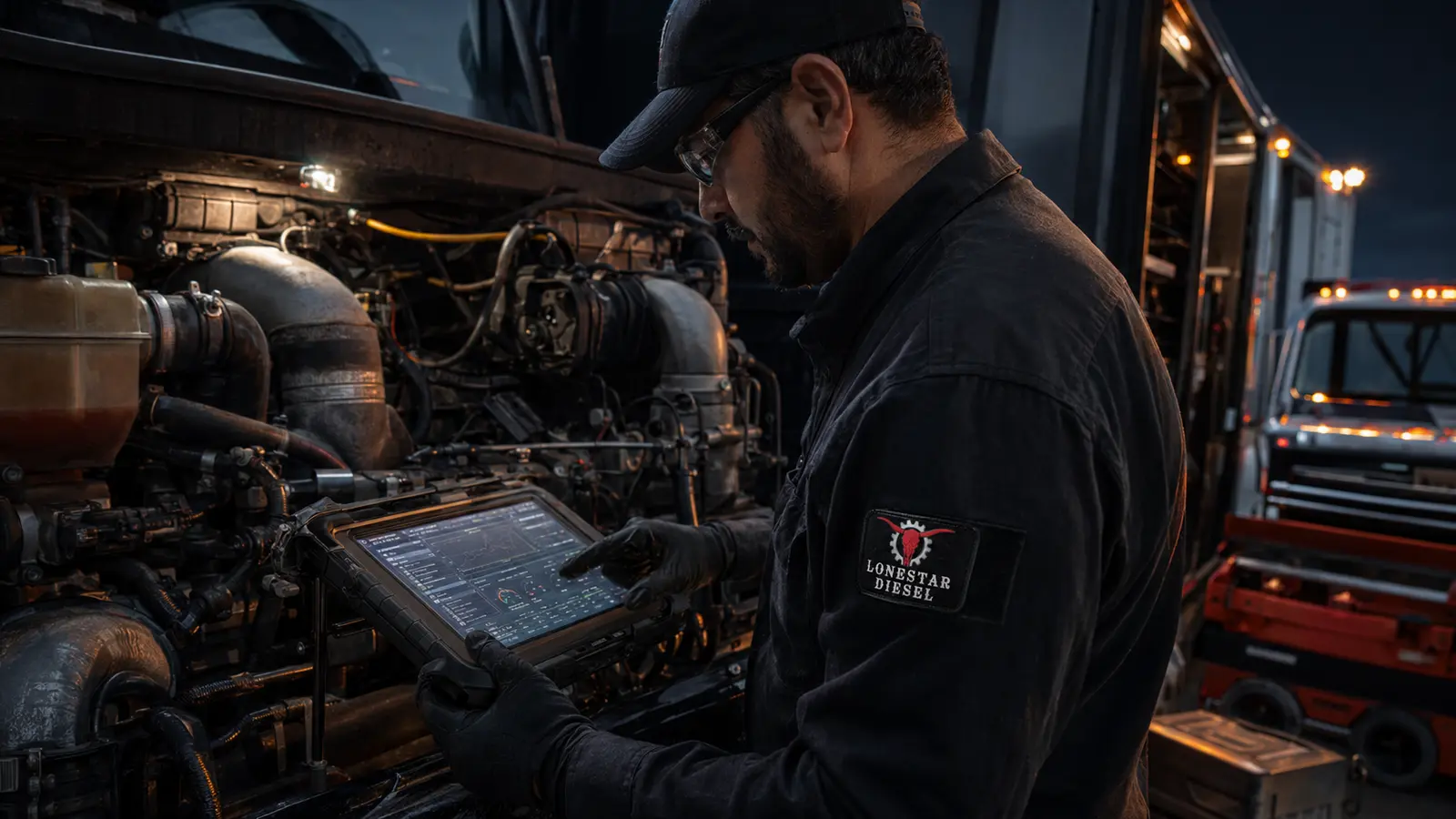
Lonestar Diesel technician using a diagnostic tablet on a commercial semi-truck diesel engine in DFW.

Need Professional Commercial Service?

Call or use the Contact page to share the exact location, vehicle information, symptoms, and service need.

Commercial Service Area Map

Verified Google map: This embedded map is connected to the Lonestar Diesel Google Maps entity. Service availability still depends on the exact truck location, direction of travel, access conditions, repair scope, and dispatch capacity.

Dieseltron, the Lonestar Diesel service guide
DieseltronCommercial Service Guide

Dieseltron Service Navigator

What Is the Truck Doing?

Choose the closest symptom. This guide recommends a service path; it does not diagnose the truck.

Want Road-Ready Tips?

Get maintenance guidance, new resources, and service announcements from Lonestar Diesel.

Road-Ready email updates are being configured. Please check back soon or call (469) 781-2069 for commercial service.

If there is an immediate safety risk, move to a safe location when possible and call for professional assistance.

Seraphinite AcceleratorOptimized by Seraphinite Accelerator
Turns on site high speed to be attractive for people and search engines.