...
CALL FOR ROADSIDE SERVICE
Skip to service informationCall (469) 781-2069

Commercial Class 6–8 Service · DFW & North Texas

Cooling System Repair for Commercial Trucks Across DFW

Heavy-duty cooling-system diagnostics for overheating, leaks, and temperature-control concerns. Lonestar Diesel serves owner-operators, dispatchers, fleet managers, transportation companies, and commercial drivers throughout North Texas.

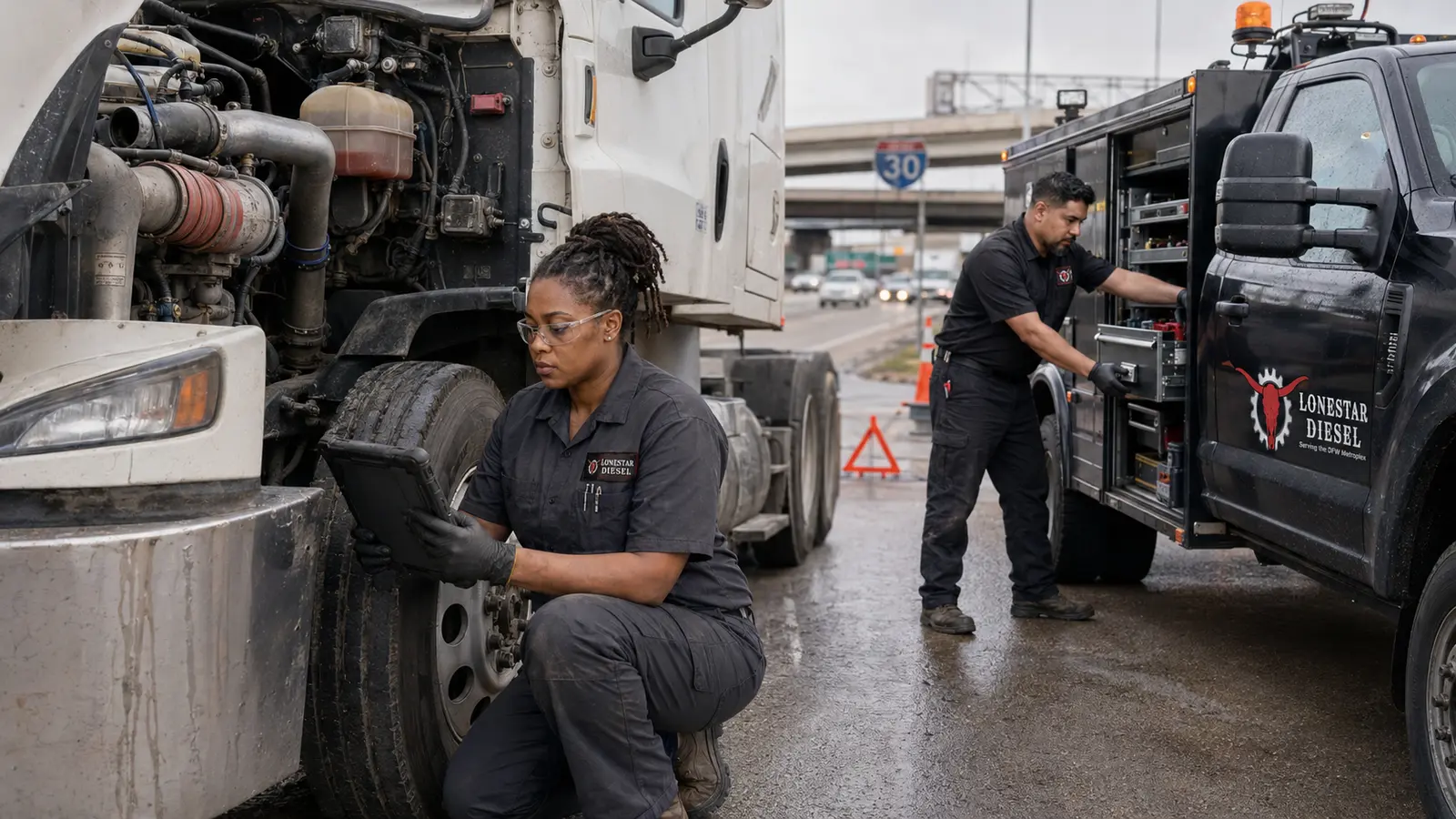
Lonestar Diesel technicians diagnosing a white commercial semi truck beside Interstate 30 in the DFW area.

Cooling System Repair Built Around Commercial Uptime

North Texas heat and heavy commercial duty cycles place substantial demand on diesel cooling systems. Lonestar Diesel supports cooling-system diagnosis and repair involving radiators, hoses, clamps, coolant leaks, water pumps, thermostats, fan systems, reservoirs, sensors, and related overheating or temperature-warning concerns.

This page is dedicated to commercial search intent. Lonestar Diesel does not position this service around consumer diesel pickups, performance tuning, lift kits, or light-duty automotive work. The focus remains semi trucks, tractor-trailers, box trucks, straight trucks, and business fleets that depend on dependable heavy-duty equipment.

A productive service request starts with accurate information. Tell the team what the driver observed, when the condition began, which warning indicators appeared, what changed immediately before the problem, and whether the vehicle is located in traffic, at a terminal, inside a fleet yard, at a job site, or at another safe commercial location.

Common Commercial Problems We Evaluate

Symptoms often overlap across mechanical and electrical systems. The goal is to evaluate the complete complaint and avoid replacing components based only on an assumption.

Overheating or abnormal temperature readings

Commercial trucks can show this condition through warning indicators, drivability changes, unusual sound or behavior, visible damage, leaks, or a complete loss of operation. A systematic inspection helps determine which system needs attention.

Visible coolant loss, leaks, or odor

Commercial trucks can show this condition through warning indicators, drivability changes, unusual sound or behavior, visible damage, leaks, or a complete loss of operation. A systematic inspection helps determine which system needs attention.

Fan, thermostat, water-pump, or circulation concerns

Commercial trucks can show this condition through warning indicators, drivability changes, unusual sound or behavior, visible damage, leaks, or a complete loss of operation. A systematic inspection helps determine which system needs attention.

Damaged hoses, clamps, reservoirs, or radiator components

Commercial trucks can show this condition through warning indicators, drivability changes, unusual sound or behavior, visible damage, leaks, or a complete loss of operation. A systematic inspection helps determine which system needs attention.

Commercial Systems and Equipment Covered

Service scope depends on the vehicle, access, safety conditions, required tooling, parts availability, and the final diagnosis. The following systems are common starting points for cooling system repair requests.

Radiators, reservoirs, hoses, and clamps

Service begins by confirming the complaint, reviewing visible conditions and available diagnostic information, and narrowing the repair path before parts or labor decisions are made.

Water pumps, thermostats, and circulation components

Service begins by confirming the complaint, reviewing visible conditions and available diagnostic information, and narrowing the repair path before parts or labor decisions are made.

Fan drives, sensors, and electrical controls

Service begins by confirming the complaint, reviewing visible conditions and available diagnostic information, and narrowing the repair path before parts or labor decisions are made.

Coolant connections and temperature-monitoring systems

Service begins by confirming the complaint, reviewing visible conditions and available diagnostic information, and narrowing the repair path before parts or labor decisions are made.

How the Commercial Service Process Works

1. Request Service

Call or use the service-request page. Provide the commercial vehicle type, exact location, symptoms, warning information, urgency, and a safe callback number.

2. Confirm the Situation

The service team reviews the information, confirms access and safety considerations, and identifies useful tools, diagnostic equipment, or parts to prepare.

3. Inspect and Diagnose

The technician verifies the complaint, inspects relevant systems, reviews available diagnostic information, and narrows the cause before discussing repair direction.

4. Repair and Follow Up

Authorized work is completed when the repair is appropriate for the location and available resources. Additional recommendations are communicated clearly when follow-up is needed.

Why Commercial Operators Choose Lonestar Diesel

Commercial customers need direct communication, a clear understanding of vehicle downtime, and service focused on heavy-duty equipment. Lonestar Diesel combines mobile service positioning, DFW coverage, commercial vehicle specialization, diagnostic thinking, and fleet-ready support in one consistent brand experience.

For emergency visitors, the page keeps the verified phone action visible. For fleet managers and planned service customers, the request-service path provides a quieter way to share equipment details and maintenance needs. Every major section provides a logical next step instead of leaving visitors at a dead end.

Related Commercial Diesel Services

Related Commercial Truck Resources

Official Transportation & Maintenance References

Use current public-sector sources for regulatory and North Texas road context. These links provide reference information and do not endorse Lonestar Diesel.

Cooling System Repair Across Priority DFW Markets

Explore the first ten launch Market Hubs for local commercial truck repair information, route context, nearby coverage, and direct links back to this DFW-wide service. Dedicated city-and-service pages are reserved for a later expansion phase.

Frequently Asked Questions

What types of commercial vehicles can request cooling system repair?

Lonestar Diesel focuses on semi trucks, tractor-trailers, box trucks, straight trucks, fleet vehicles, and other Class 6 through Class 8 commercial diesel equipment. Provide the year, make, model, vehicle type, location, and symptoms when requesting service.

Does Lonestar Diesel provide cooling system repair throughout DFW?

Service requests are supported across the Dallas–Fort Worth Metroplex and surrounding North Texas markets. Availability and response timing depend on the truck location, current dispatch load, repair scope, and safe access to the vehicle.

What information should I provide before service?

Share the exact location, commercial vehicle type, warning lights or fault information, current symptoms, whether the truck can move safely, and the urgency. Clear information helps the service team prepare for a more focused response.

Can fleets request recurring or multi-vehicle support?

Yes. Fleet managers can request planned maintenance, diagnostic follow-up, repair coordination, and recurring commercial service. Use the fleet inquiry option or call to discuss the number and types of vehicles involved.

Need Cooling System Repair?

Tell Lonestar Diesel where the commercial truck is located, what the driver is experiencing, and how urgent the situation is. Fast, clear information helps begin the response.

Commercial Service Area Map

Verified Google map: This embedded map is connected to the Lonestar Diesel Google Maps entity. Service availability still depends on the exact truck location, direction of travel, access conditions, repair scope, and dispatch capacity.

Dieseltron, the Lonestar Diesel service guide
DieseltronCommercial Service Guide

Dieseltron Service Navigator

What Is the Truck Doing?

Choose the closest symptom. This guide recommends a service path; it does not diagnose the truck.

Want Road-Ready Tips?

Get maintenance guidance, new resources, and service announcements from Lonestar Diesel.

Road-Ready email updates are being configured. Please check back soon or call (469) 781-2069 for commercial service.

If there is an immediate safety risk, move to a safe location when possible and call for professional assistance.

Seraphinite AcceleratorOptimized by Seraphinite Accelerator
Turns on site high speed to be attractive for people and search engines.