 Skip to content
Commercial Truck Education
What To Do When Your Semi Truck Breaks Down in DFW
A roadside breakdown requires calm decisions, a safe location, accurate communication, and the right commercial service response. This guide gives drivers, owner-operators, dispatchers, and fleet managers a practical sequence for a disabled semi truck in the Dallas–Fort Worth area.
Published and reviewed by Lonestar Diesel · July 14, 2026 · Commercial educational content
Commercial Context & Safety Note
This guidance is written for semi trucks, tractor-trailers, box trucks, straight trucks, and commercial fleets. It does not replace a physical inspection, manufacturer instructions, fleet policy, emergency authority direction, or applicable law.
Protect the Driver and Other Road Users
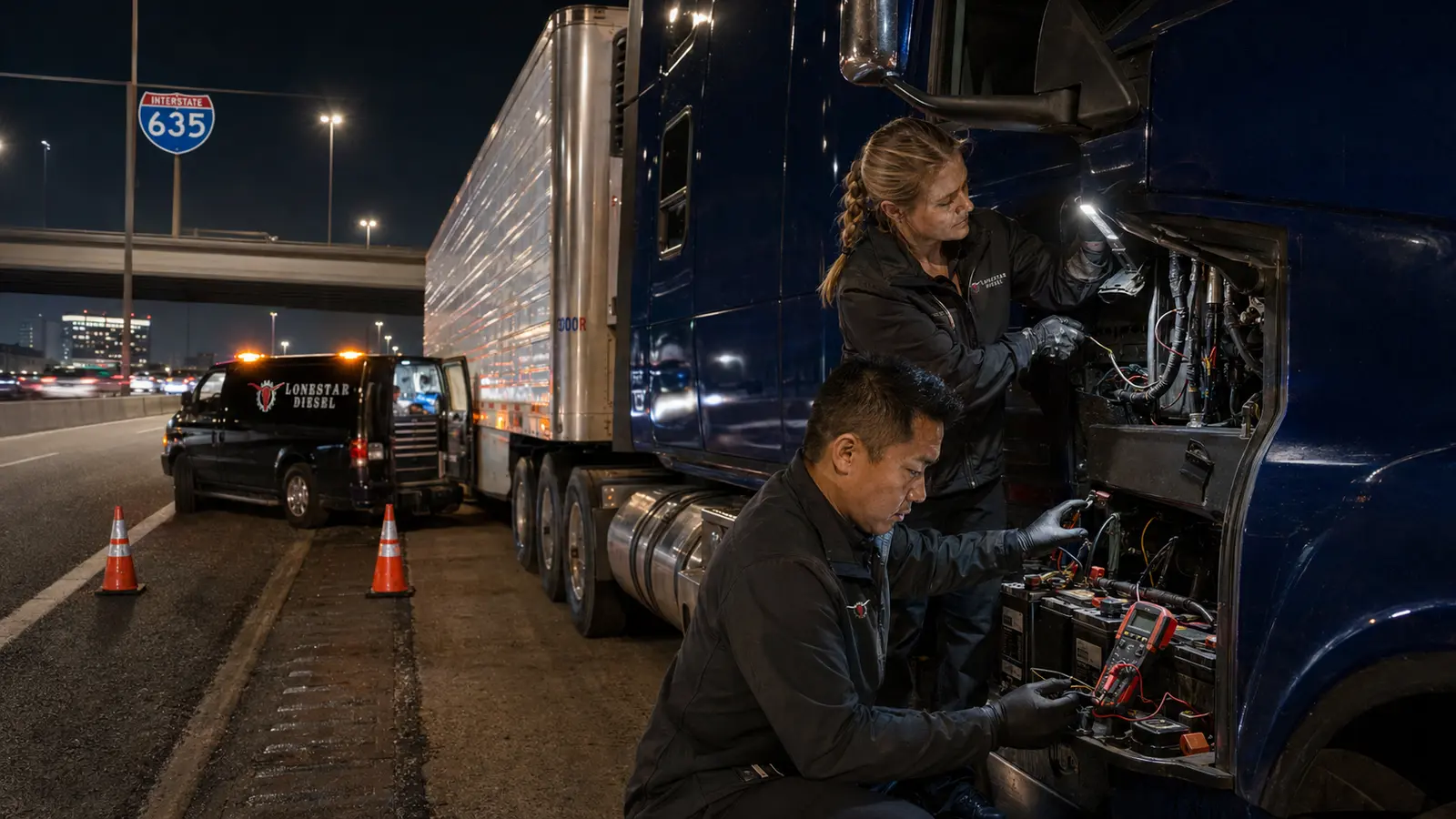
Move the truck out of active traffic when it can be done legally and safely. Activate hazard lights, use warning devices according to applicable requirements, remain aware of traffic, and contact emergency authorities when the truck creates an immediate roadway hazard. Never attempt a roadside repair from an exposed traffic position.
Record the Exact Location
Share the highway, direction of travel, nearest exit, cross street, facility name, unit number, and a map pin when available. DFW contains parallel frontage roads, express lanes, construction zones, and large interchanges, so a highway name alone is often insufficient.
Document the Symptoms
Note warning lights, unusual sounds, smells, smoke, leaks, temperature changes, air-pressure behavior, recent repairs, and what happened immediately before the truck stopped. Photographs can help explain visible conditions, but they do not replace a professional inspection.
Call a Commercial Diesel Provider
Provide the tractor and trailer type, location, symptoms, urgency, and whether the vehicle is positioned safely. Mobile diesel repair may reduce downtime when the condition can be diagnosed and repaired at the location; other situations may require towing or a controlled shop environment.
Close the Loop After the Truck Moves
Record the diagnosis, work performed, parts used, and follow-up recommendations. Fleet managers should review repeat symptoms across similar units and update preventive maintenance so one roadside event becomes useful operating information.
Frequently Asked Questions
Should I call emergency authorities when a semi truck breaks down?
Call emergency authorities when the disabled truck creates immediate danger, blocks active travel lanes, involves a collision, fire, injury, hazardous material, or another emergency. A diesel provider does not replace emergency response.
What information should I give a mobile diesel mechanic?
Provide the exact location and map pin, direction of travel, truck and trailer type, unit details, warning messages, symptoms, recent repairs, access conditions, and whether the vehicle is safely positioned.
Can every semi-truck breakdown be repaired roadside?
No. Field suitability depends on safety, access, diagnosis, tooling, parts, repair scope, environmental conditions, and the ability to verify the repair.
How can fleets reduce repeat breakdowns?
Document the verified cause, close follow-up repairs, review similar units, measure repeated defects, and adjust maintenance intervals using actual fleet data.
Related Service, Resource & Market Coverage
Continue Reading
Official Reference Links
Need Commercial Diesel Service?
Call with the exact location, vehicle type, symptoms, warning information, and urgency.
Commercial Service Area Map
Lonestar Diesel location: 104 Indian Dr, Balch Springs, TX 75181. This is the business location; mobile service coverage extends across DFW and North Texas. Call ahead to confirm current in-shop availability.
Commercial Service Visual Guide


