
This guidance is written for semi trucks, tractor-trailers, box trucks, straight trucks, and commercial fleets. It does not replace a physical inspection, manufacturer instructions, fleet policy, emergency authority direction, or applicable law.
 Skip to content
 Commercial Truck Education
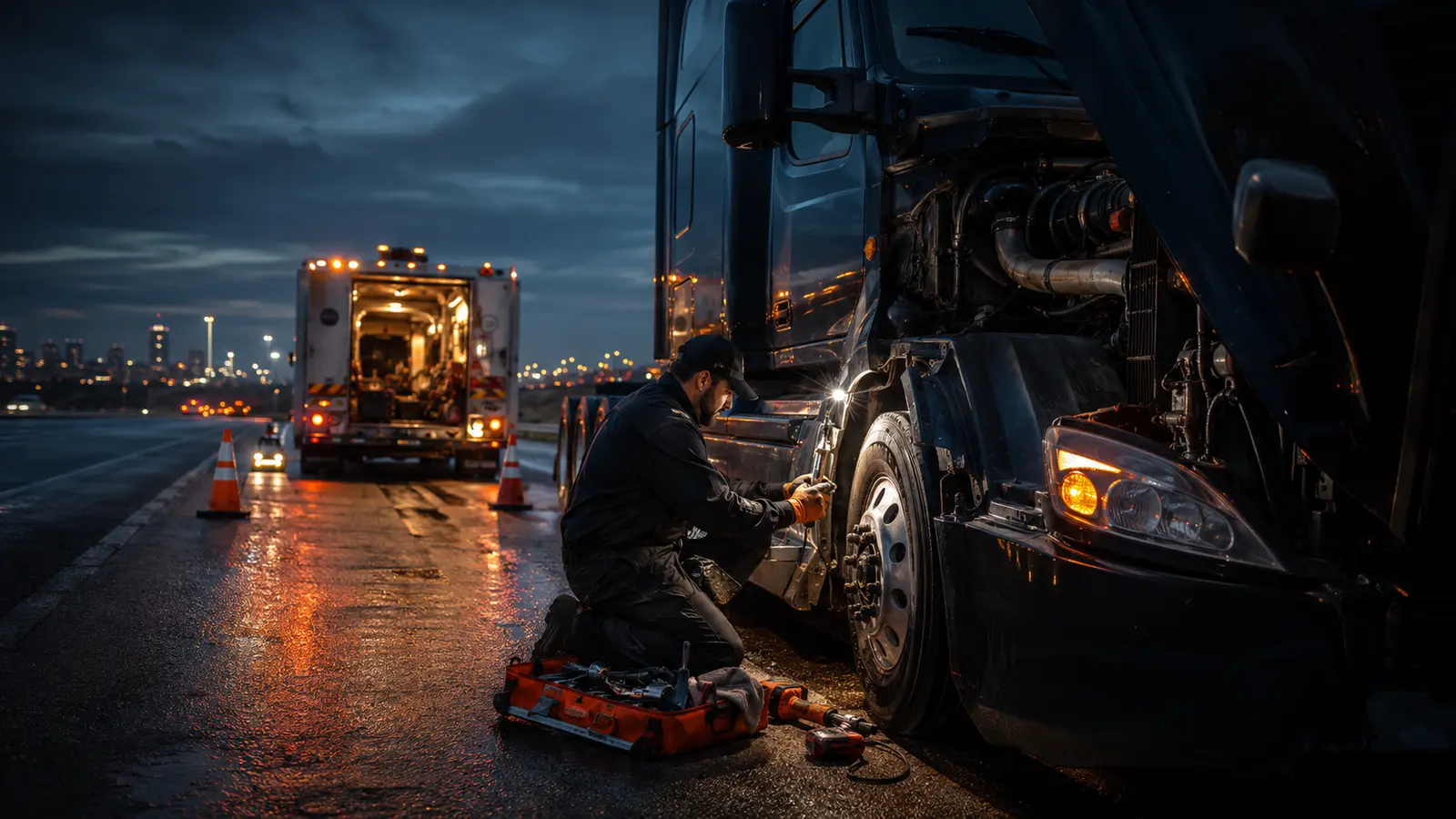
Mobile diesel repair can reduce fleet downtime by bringing appropriate diagnostics, maintenance, and selected repairs to a commercial truck instead of moving every unit through a tow and shop queue. The advantage is strongest when dispatch information is accurate and the work is suitable for a safe field environment.
Published and reviewed by Lonestar Diesel · July 14, 2026 · Commercial educational content
This guidance is written for semi trucks, tractor-trailers, box trucks, straight trucks, and commercial fleets. It does not replace a physical inspection, manufacturer instructions, fleet policy, emergency authority direction, or applicable law.
When the vehicle is accessible and the repair is field-suitable, mobile service can remove the time required to arrange a tow, move the combination, enter a shop queue, and return the unit to its operating location.
A map pin, unit details, warning messages, photos, recent repairs, access instructions, and precise symptoms help the provider prepare appropriate tooling and a stronger initial service direction.
The current condition can preserve evidence that disappears after towing, cooling down, charging a battery, clearing a code, or cycling power. Field diagnosis can document that evidence before choosing mobile or shop repair.
Planned mobile maintenance and selected repairs can be coordinated while units are parked at a safe yard, terminal, warehouse, or job site, reducing driver movement and scattered maintenance windows.
Track dispatch, diagnosis, repair, parts delay, towing, shop queue, return-to-service time, repeat failure, and follow-up work. A fast response that produces a repeat breakdown is not an uptime win.
Diagnostics, starting and charging work, selected electrical repairs, hoses, filters, minor leaks, preventive maintenance, and certain mechanical repairs may be possible when safety, access, parts, tooling, and verification allow.
A shop is generally more appropriate for heavy lifting, extensive disassembly, machining, alignment, controlled environmental needs, specialized fixed equipment, or prolonged secure storage.
Compare total operational impact: dispatch, towing, driver delay, missed work, shop queue, parts, repair time, substitute equipment, repeat failure risk, and return-to-service time.
Yes, when the property owner authorizes access and the location provides a safe, workable environment for the planned service.
Call with the exact location, vehicle type, symptoms, warning information, and urgency.
Verified Google map: This embedded map is connected to the Lonestar Diesel Google Maps entity. Service availability still depends on the exact truck location, direction of travel, access conditions, repair scope, and dispatch capacity.


 Optimized by Seraphinite Accelerator